3 Most Common Injuries in Golf
Whether you are competing, having a family affair, or taking money from your friends on the course, golf always finds a way to keep us coming back for more. We all know the sport itself can be challenging mentally and physically, but no matter how many double bogeys, shanks, lip-outs, or bad shots, there is that one perfect swing that reinforces your love of the game.
When it comes to your body, golf is demanding as it requires a sequence of body movements to effectively hit the ball. However, the majority of us live with physical limitations due to postural adaptations, including limitations in flexibility and strength. This may cause undue stress on other parts of the body, with the most common golf injuries found in the lower back, shoulder, and elbow.1
There are many reasons why injuries such as low back pain, rotator cuff tears and golfer’s/tennis elbow may occur. You can help yourself by learning proper swing mechanics with a professional swing coach. However, it’s also beneficial to understand how movements throughout your body may limit your potential. Some reasons for these limitations can be a result of muscle imbalances, decreased flexibility, inadequate strength, decreased conditioning or simply improper warm up.
The lower back is sandwiched between the thoracic spine (mid-back) and the hips, both of which require a lot of rotational mobility in the golf swing. Ironically, these are two areas of mobility most people lack due to postural adaptations from sitting. These limitations may cause undue stress on the lower back, leading to possible muscle strains and herniated discs. Improving your mobility will not only help minimize stress and possible injuries, it will also prepare your body to deliver a more powerful swing.
The second most common injured area is the shoulder, which requires a big excursion of movement transitioning from the backswing, through impact and the follow through. The repetition of this transition can cause strain on the rotator cuff tendons. The best way to keep your shoulders healthy is to improve mobility of your mid-spine and to strengthen the shoulder girdle. Good mobility of the mid-spine will allow for an optimal posture of the shoulder, decreasing stress on the rotator cuff tendons. Once you learn how to properly get positioned, strength around the shoulder is beneficial to withstand the forces that occur at impact. Whether you end up “chunking” the ball or striking the ball clean, the impact over time can create some stress on the arms.
The third injury that’s very common is golfers/tennis elbow. Repeated motions or a decreased strength of the shoulder and triceps strength have shown to contribute to elbow pain. Due to the physical demands of this sport, it is important to optimize your mobility and overall strength in order to keep you playing.
In an amateur golfer, there are more risk factors for injuries. Find out how one of our certified Titleist Performance Institute (TPI) clinicians can help you improve your game and reduce the risk of injuries. We understand the importance of keeping you in the game to make it through competitions or to keep up with your social life.
1 Wadsworth LT. When Golf Hurts: Musculoskeletal Problems Common to Golfers. Musculoskeletal Problems in Golfers. 2007. 362-365.
Meet the Author:
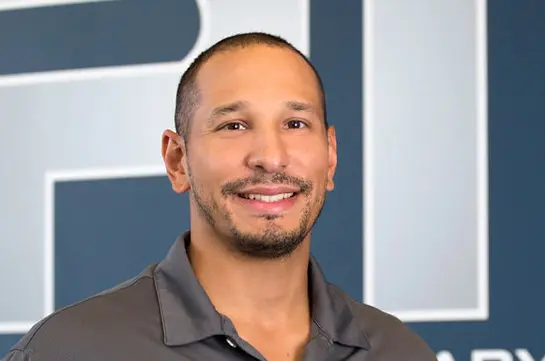
Dr. Brandon Cruz, PT, DPT, OCS, SCS, CSCS, FAAOMPT
Founder, Pursue PT
Dr. Brandon Cruz is a Partner at Mosaic Golf and the Founder of Pursue Physical Therapy. He received his Bachelor of Science degree in Kinesiology from Temple University and continued his postgraduate work at UMDNJ, now Rutgers University, where he went on to graduate with his Doctorate of Physical Therapy degree. Dr. Cruz is fellowship trained and has obtained an elite distinction holding duel Board Certifications in Orthopedic and Sports Rehabilitation (OCS), (SCS) putting him in the top 1% of all practitioners in the country.
During his time at Temple, Dr. Cruz was fortunate enough to work side-by-side with the university’s top physical therapist and strength coaches to help facilitate rehab programs for their Division 1 athletes. Dr. Cruz also spent time at The University of Florida’s Orthopedic and Sports Medicine Institute where he had the opportunity to work with rising D-1 Athletes across a number of sports. He is also an active member and advocate for the APTA sports, orthopedic sections, and (AAOMPT).
Dr. Cruz is also Titleist Performance Institute (TPI) Certified. He leverages this expertise to help golfers construct their body for their perfect swing. As an avid golfer, he is continually striving to enhance the game.
© Copyright 2023. All Rights Reserved.